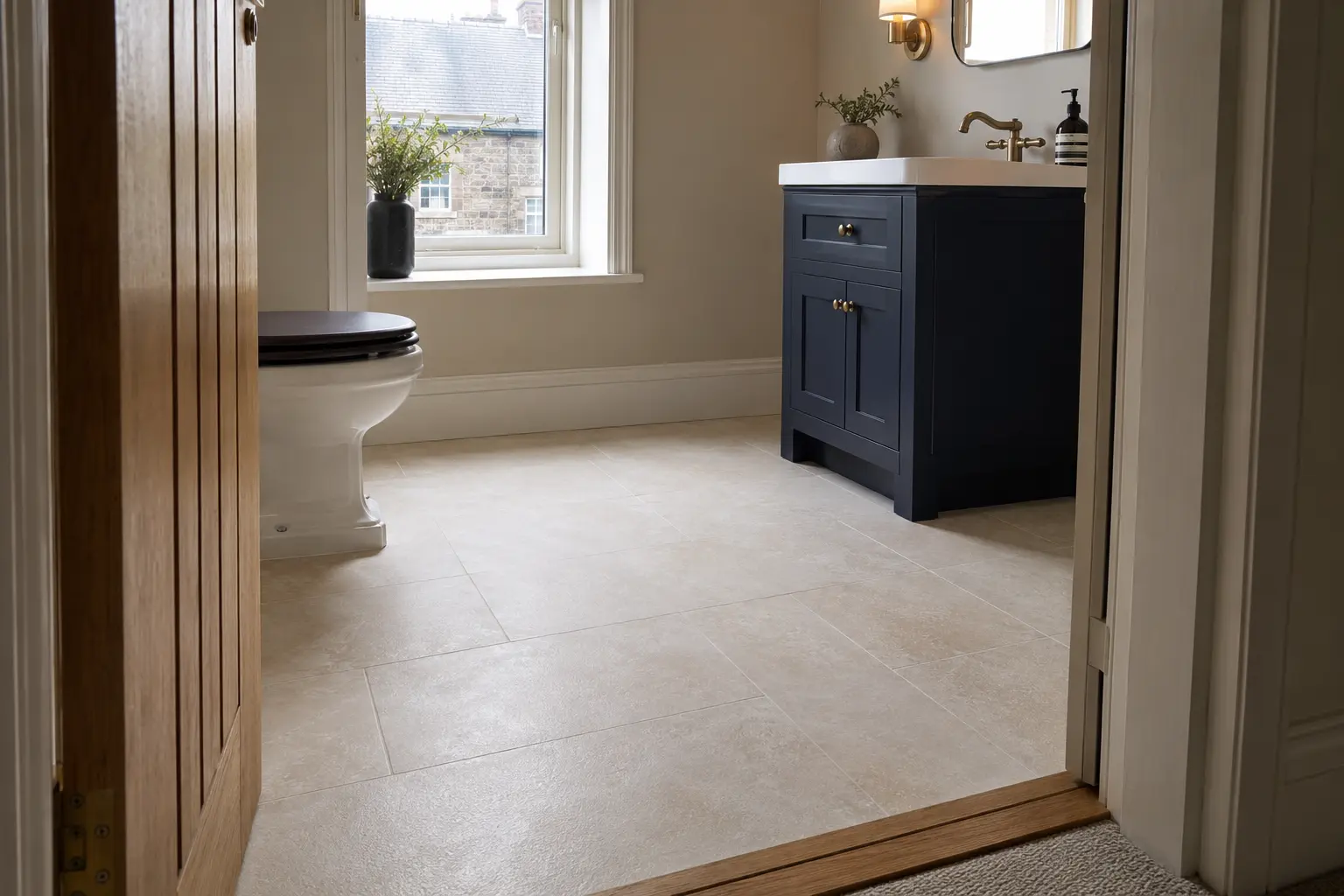
Start with how the bathroom is used
A family bathroom may need to cope with frequent splashes, regular cleaning and several people using it in quick succession. Write down the issues with the existing floor: perhaps it feels cold, has damaged joints, is difficult to clean or has an awkward step at the door. Those practical problems give you a better starting point than choosing a new floor by colour alone.
Decide whether the floor is for an ordinary bathroom, a shower area or a complete wet-room installation. A product suitable for one situation is not automatically suitable for another. Check the manufacturer's intended use and installation requirements for the actual range. Descriptions such as water-resistant and waterproof do not explain every limit, joint detail or requirement for the base underneath, so review the complete system with the installer.
Have the existing base checked
The new finish needs a suitable base. Loose boards, movement, damp or damage can affect the installation even if the surface is later covered. Ask what preparation is required and whether it is included in the quote. If the full condition cannot be seen until removal, agree how unexpected problems will be shown to you and how extra work will be approved before it proceeds.
Finished height matters as well. New preparation layers and flooring can alter the doorway, shower entrance, bath panel and furniture connections. Ask how the floor will meet the neighbouring room and whether the door needs adjustment. A smooth-looking photograph does not show these details. Keep them on the measured plan so the chosen covering works with the rest of the bathroom instead of creating an inconvenient step or poor fit.
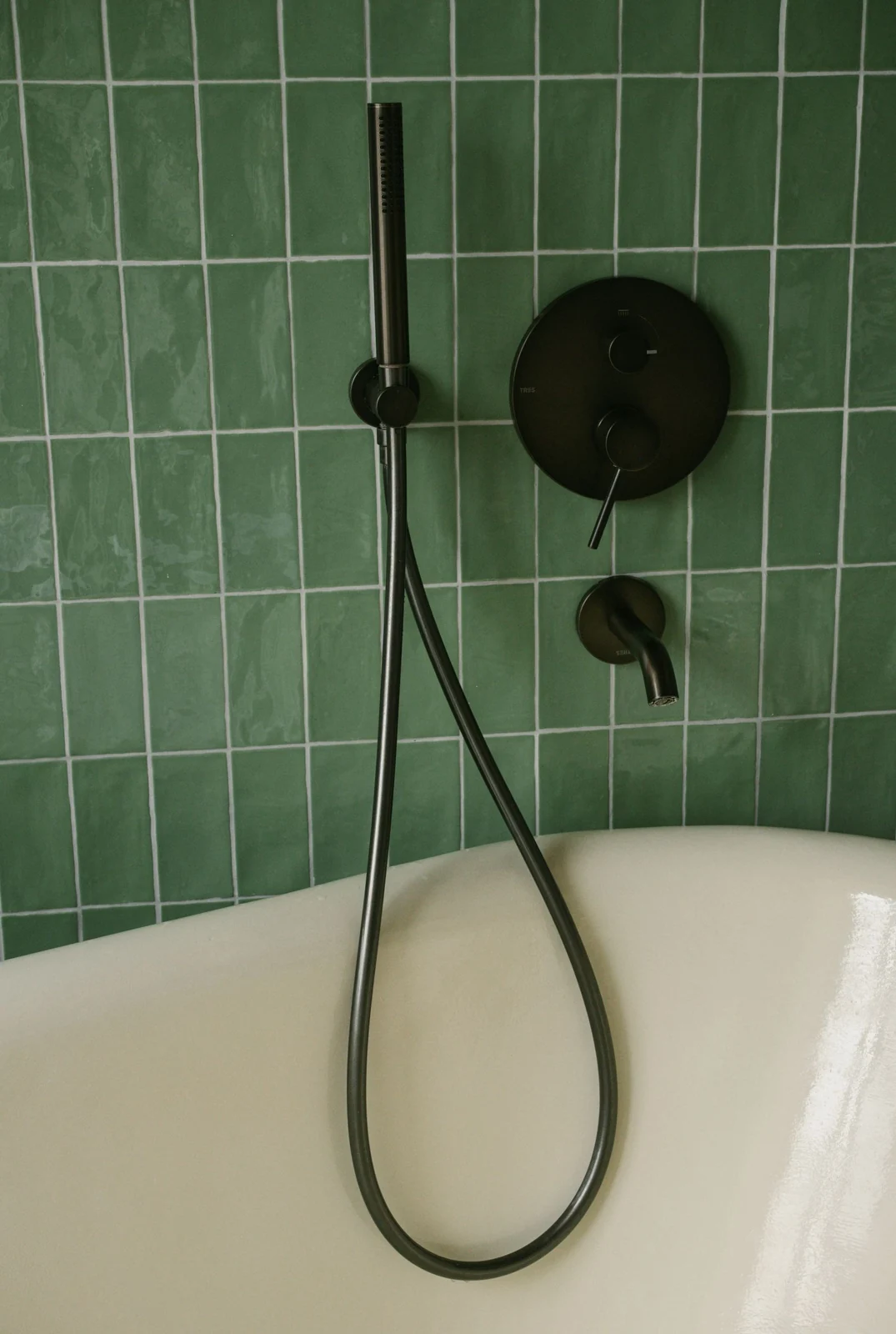
Compare Bathroom Tiles and Vinyl Flooring
Tiles provide many choices of size, texture and appearance, but their installation and cleaning needs vary. Check suitability for the intended wet use and the requirements for the base, adhesive, grout and movement. Natural stone has its own care needs, so do not assume that every tile can be cleaned in the same way. The grout layout also affects the finished look and routine cleaning.
Vinyl products made for bathrooms can provide a different feel underfoot and a wide range of designs. Suitability depends on the specific product and fitting method. Some systems have requirements around joints, edges, moisture and heavy fittings. Read those details before choosing by a general material name. Ask the installer to explain how the proposed floor will be fitted around the toilet, bath and shower area.
Consider grip and cleaning together
Choose a surface intended for the conditions in which it will be used. No floor is slip-proof, and water, soap or cleaning residue can change how it behaves. Texture may be useful in some products but can also affect the cleaning routine. Ask about the actual specification and care instructions rather than treating a rough-looking sample as proof that it will suit every household.
Plan how splashes will be contained and keep the route through the bathroom clear. A badly positioned screen or overflowing storage can undermine an otherwise sensible floor choice. Use suitable cleaning products and follow their instructions, including any rinsing or drying advice. If someone has particular mobility or balance needs, include the flooring in the overall bathroom assessment rather than deciding it separately from the entrance, lighting and support arrangements.
Check warmth, lighting and the room's appearance
Look at a sample in the bathroom at different times of day. The floor's colour and pattern can appear different beside the chosen wall finish and under the planned lighting. A very busy pattern may compete with other details, while a plain finish can make joints and changes in level more noticeable. Consider how the whole room looks rather than trying to match every surface exactly.
If underfloor heating is proposed, check compatibility with the flooring and the complete installation. Discuss controls, preparation, electrical work and running arrangements with the relevant qualified tradespeople. Do not assume that every covering or adhesive suits every heating system. Ask for product-specific guidance and keep it with the quote, including any limits or instructions that affect installation, use and care after the bathroom has been completed.
Agree the work and future care
Compare quotes that include removal, assessment, preparation, flooring, fitting and finishing at the edges and doorway. Confirm what happens if hidden damage is found and when the floor can be used after installation. Keep required drying or setting periods in the schedule. A shorter-looking timetable is not useful if it leaves out a preparation stage or allows use before the chosen system is ready.
At handover, collect the product name, cleaning instructions and relevant maintenance information. Ask about spare material and what a future repair would involve. The best floor for a busy bathroom is one that suits its wet-use conditions, can be maintained by the household and works with the base beneath it. Choose on those points alongside appearance, rather than expecting one material name to guarantee comfort, durability and easy cleaning in every room.
To see the work this involves, read about our bathroom flooring in hamilton. You can also read understanding uneven bathroom floors and tiles or wall panels.